
Why Conservation Exists?
Beyond technique, what conservation asks of us now.
Rome has long spoken in the language of eternity—through monument, stone, and civic scale. Its architecture declares endurance, asserting that form, once established, could outlast those who conceived it.
Artists have imagined their work surviving them. Across centuries, paintings, frescoes, and sculptures were made with the knowledge—or hope—that they would continue to speak long after the artist’s own life had ended. And with religious works, this aspiration extends further still. These objects were not only meant to endure time but to surpass it, carrying belief, devotion, and meaning across generations yet to be born.
Ovid offers a counterpoint: Omnia mutantur, nihil interit / Everything changes; nothing perishes.
In Metamorphoses, transformation is not a failure of permanence; it is its condition. Forms shift, materials alter, meanings migrate. Continuity is achieved not through stasis, but through change.
This tension—between monumentality, artistic aspiration, spiritual transcendence, and the reality of material change—lies at the heart of conservation. Conservation does not promise eternity. It begins from acceptance: that artworks age, that surfaces record time, that even objects made to surpass mortality remain subject to it. Care, rather than permanence, becomes the ethical ground.
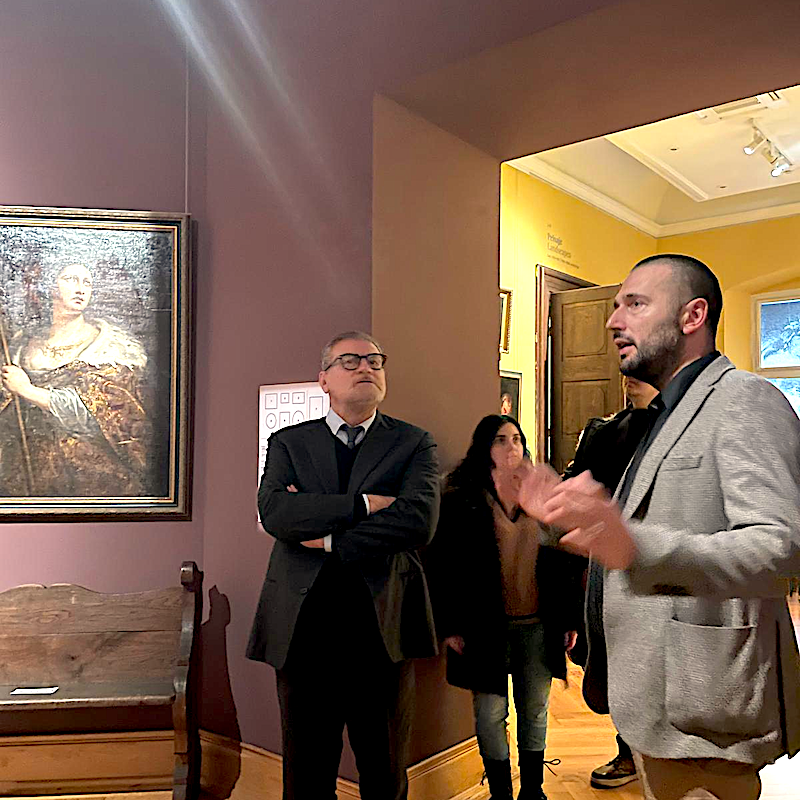
This question of impermanence and care is taken up directly in a recent exhibition project, The Fragility of the Eternal: From Pompeii to the Grand Tour and Beyond at the National Museum of Art of Timișoara, by director and conservator Filip Petcu, co-curated with Professor Massimo Osanna, Director of the Italian Museums. The exhibition brings together over one hundred works from major Italian institutions to examine how civilizations confront impermanence and preserve memory through return, reinterpretation, and care.
What survives in culture is not simply what was built to last, nor what was believed to transcend time, but what continues to be held in consciousness through attention, restraint, and ethical responsibility. The work of conservation, as it unfolds in the studio, is where theory meets material reality, and decisions are shaped as much by what one chooses not to do as by the intervention itself. For future viewers, future caretakers, and the cultural life that surrounds it.
Conservation, in this sense, is not an argument against monuments, art, or belief. It is a commitment to care, attentiveness, and being fully aware that nothing stands still.
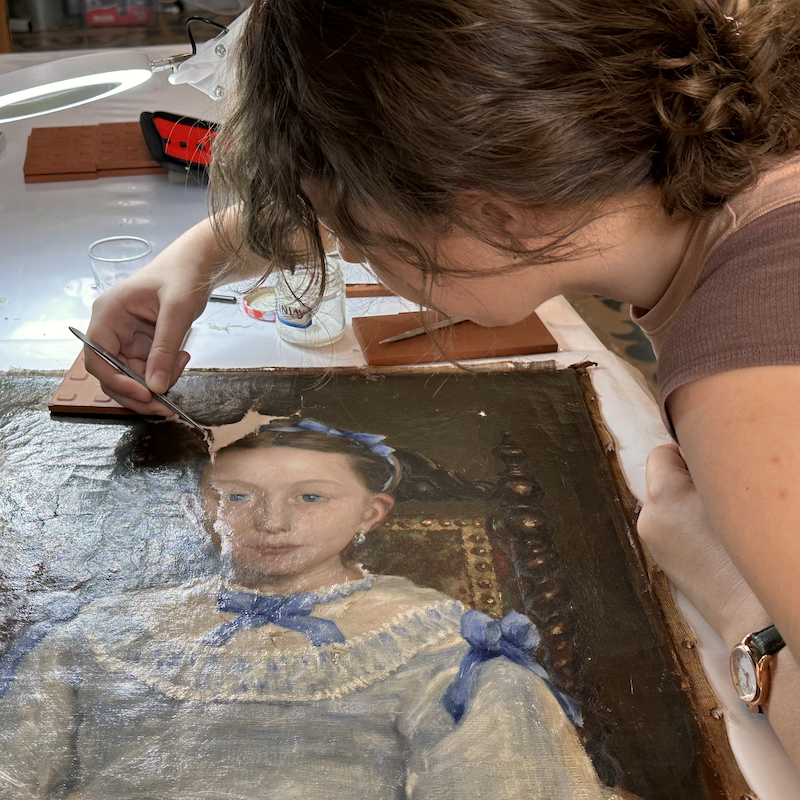
The conservation studio is where the workshop participants put these questions into practice.
Paintings arrive with their own specific conditions. Surfaces are examined, materials and past interventions are identified. Work then proceeds through careful assessment followed by measured action.
This is a place of intervention. Treatments are chosen for necessity and reversibility or retreatability. Each decision carries consequences for how an object will continue into the future.
The aim is not restoration to an imagined original state, but stability, legibility, and respect for age and use. Conservation is learned here through observation, judgment, and accountability.